

Pattern Selection
Summary of Dark and Light Iris Characteristics and Contact Lens Compatibility
Core Differences and Assessment Criteria of Dark and Light Iris
The primary difference between dark and light irises lies in the melanin content of the iris. This directly affects the color rendering, blending effect, and overall appearance of colored contact lenses.
Dimension :Dark Eyes
Melanin Content :High — iris color appears rich and deep; pupil and iris boundaries are blurred
Light Reflection:Weak reflection — eyes exhibit a “matte effect,” giving a profound and reserved look
Dimension :Light Eyes
Melanin Content :Low — iris color appears lighter; pupil and iris boundaries are clearly defined
Light Reflection:Strong reflection — eyes show a “glossy effect,” appearing bright and lively.
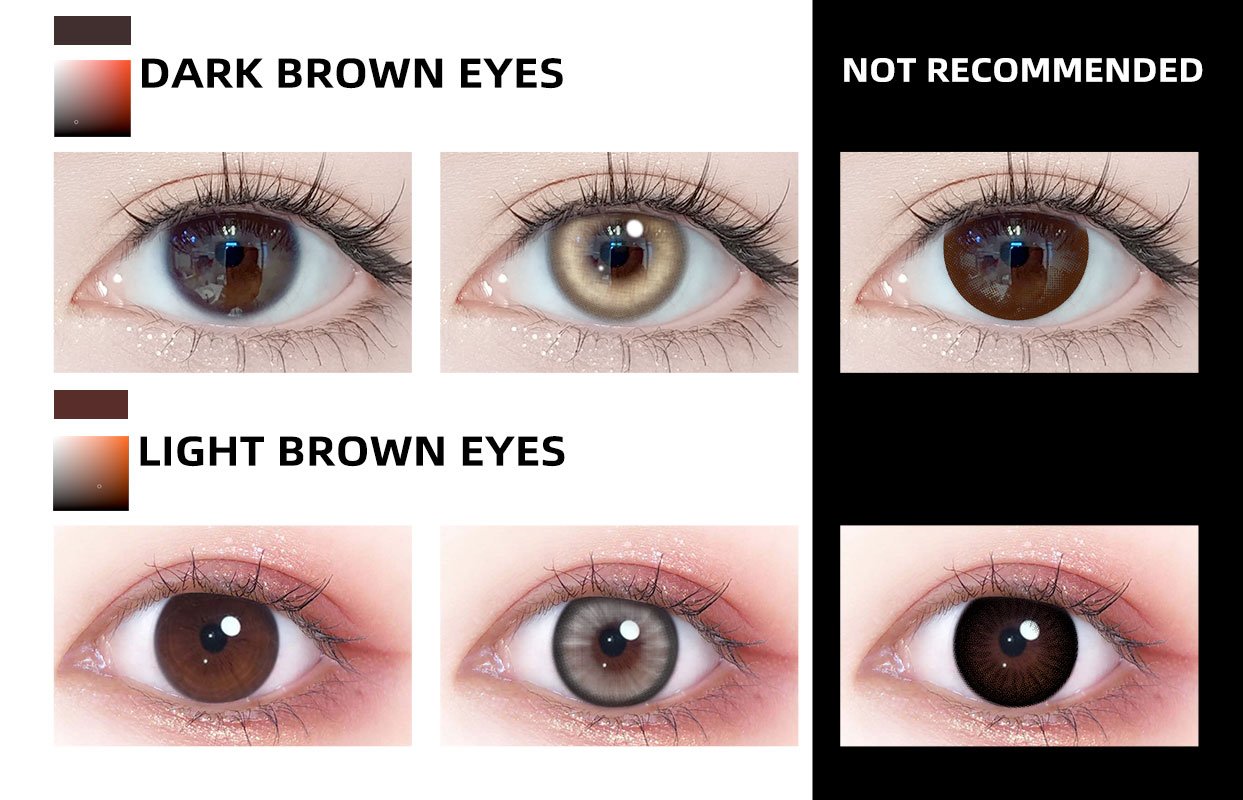
Brown Eyes (Mainstream Eye Color in Asia)
Type :Dark Brown
Visual Style :Steady, sophisticated, with a sense of “intellectual charm” or “mature elegance”
Key Styling Logic for Colored Lenses:Color: opt for high-purity shades such as gray, gold, or burgundy; Pattern: clear outer rim for definition; Texture: large-particle gradient or radiant patterns
Type :Light Brown
Visual Style :Gentle, fresh, with a sense of “first love” innocence or “harmless charm”
Key Styling Logic for Colored Lenses:Color: opt for low-saturation tones such as nude brown, pink brown, or ash brown; Pattern: choose “rimless” or soft shallow rims; Texture: fine pearlized or delicate gradient
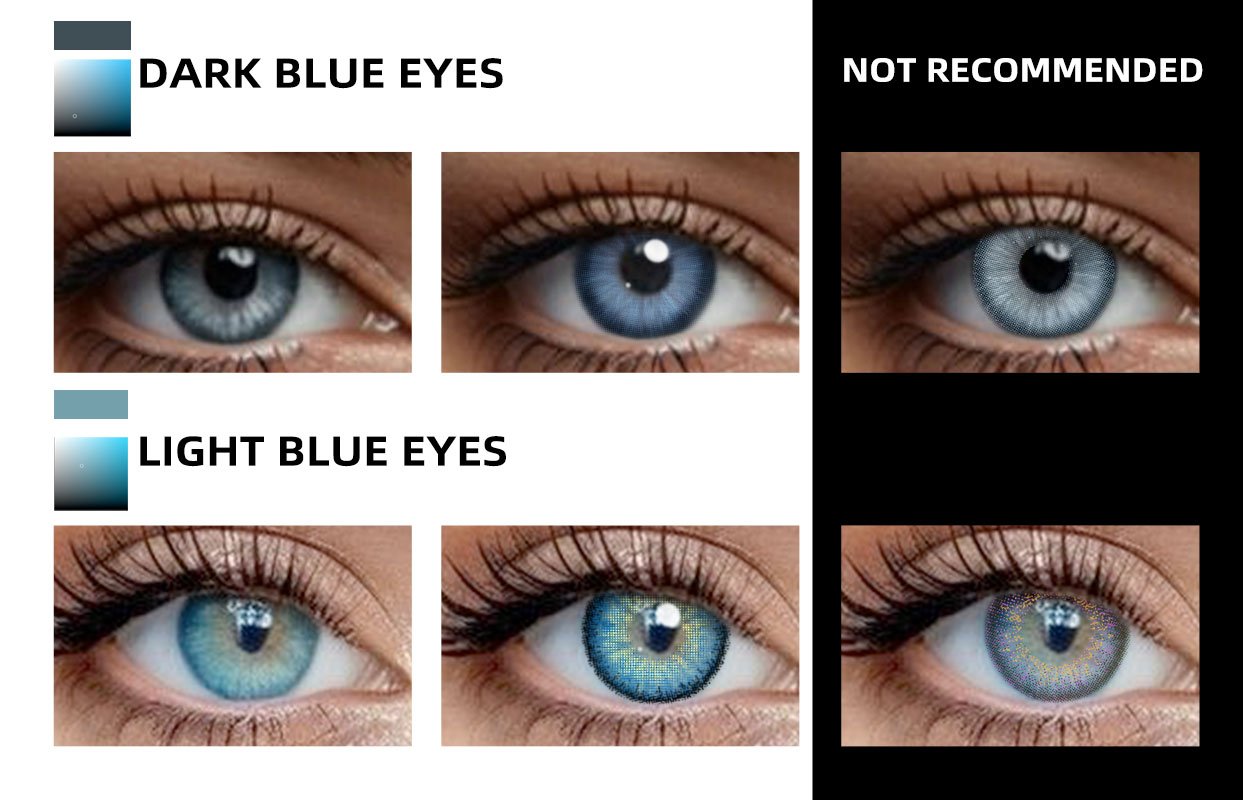
Blue Eyes
Type :Dark Blue Iris
Visual Style :Cool and mysterious, with a “distant” feel
Key Styling Logic for Colored Lenses:Color:Blue-gray, Blue-purple Pattern: Gradient border Texture: Irregular ink spots, fine radial lines
Type :Light Blue Iris
Visual Style :Ethereal and pure, with a “fairy-like” feel
Key Styling Logic for Colored Lenses:Color:Color: Light purple, Light gray, Milky blue Pattern: Borderless + fine pearlescent details Texture: Extremely fine gradient, dotted texture
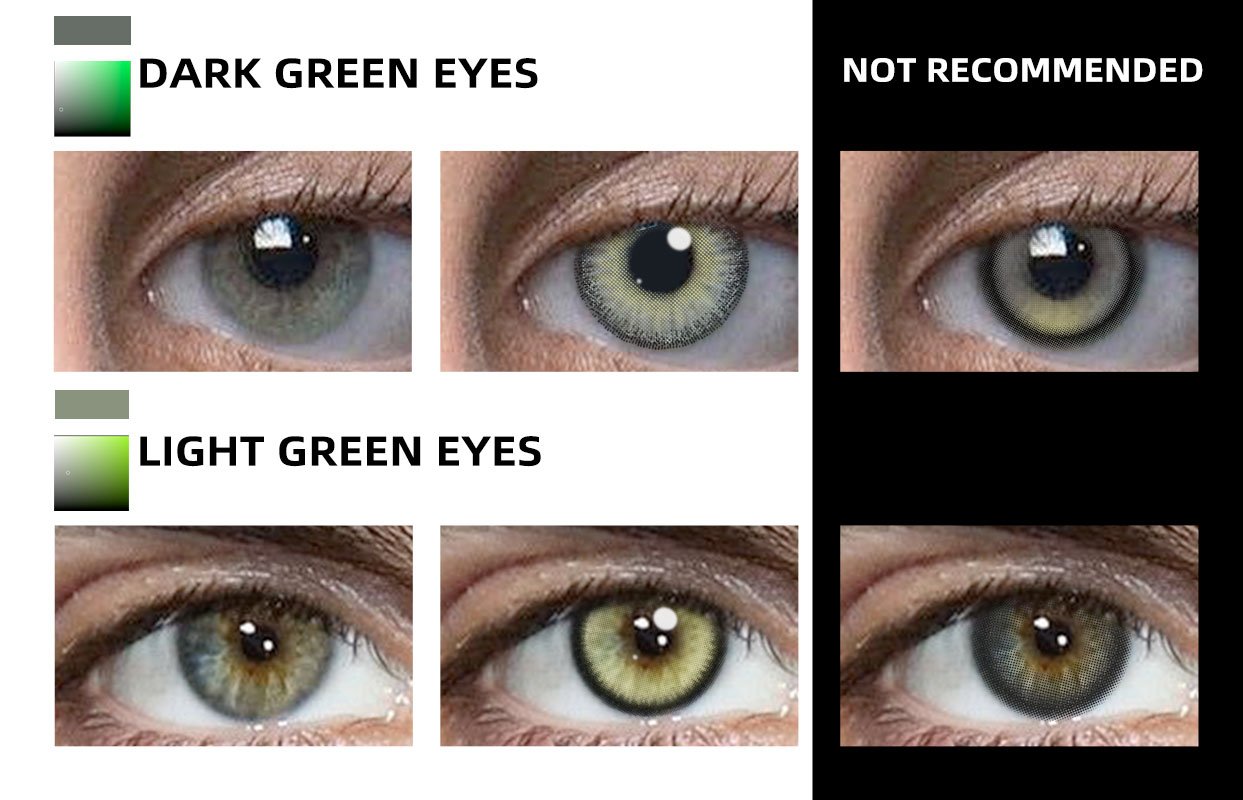
Green Eyes
Type :Dark Green Iris
Visual Style :Vintage and luxurious, with a “queenly” feel
Key Styling Logic for Colored Lenses:Color: Deep green-brown, Dark green-gold Pattern: Fine gold border Texture: Gradient gold dots, leaf vein texture
Type :Light Green Iris
Visual Style :Natural and lively, with a “fairy-like” feel
Key Styling Logic for Colored Lenses :Color: Light green-brown, Mint gray Pattern: Borderless + light green gradient Texture: Fine green dots, subtle pearlescent effect
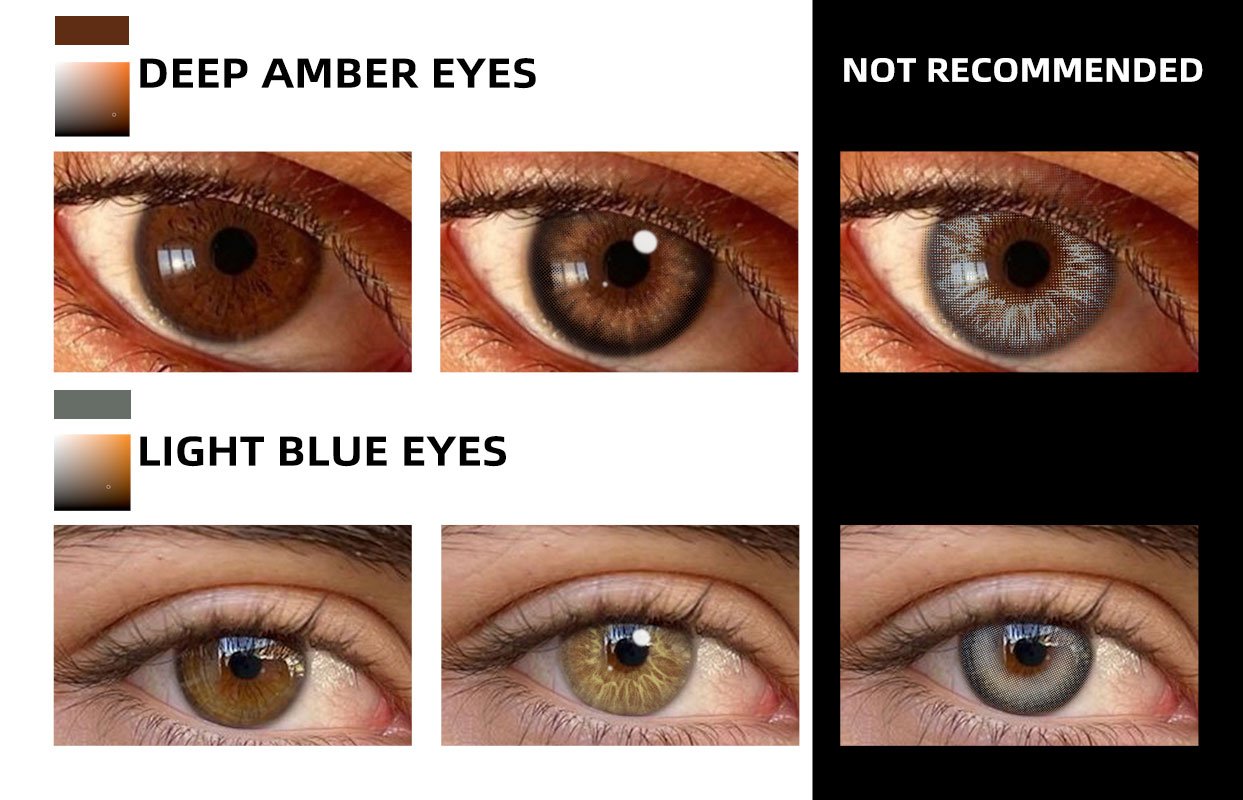
Amber Eyes
Type :Dark Amber Iris
Visual Style :Warm and grand, with a “mature lady” feel
Key Styling Logic for Colored Lenses:Color: Amber brown, Golden brown Pattern: Fine dark brown border Texture: Gradient gold-brown, radial warm lines
Type :Light Amber Iris
Visual Style :Energetic and sweet, with an “innocent” feel
Key Styling Logic for Colored Lenses:Color: Light milk brown, Pink amber Pattern: Borderless + light amber gradient Texture: Fine pearlescent, dotted warm lines
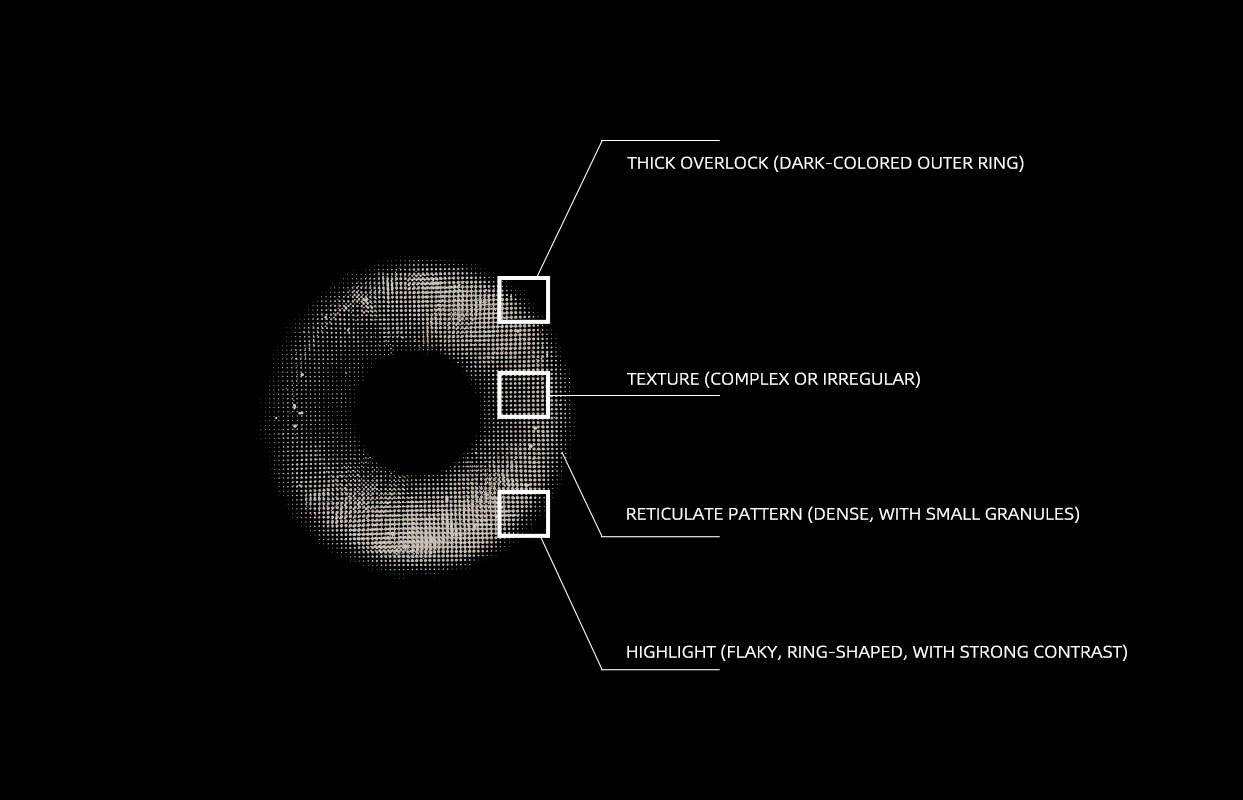
Core Highlight Contact Lens
Compatibility Formula
Type :Dark Iris
Core Highlight Contact Lens Formula :Outer ring: thin circular highlight (enhances contour) + inner ring: medium highlight flakes (0.3–0.5 mm, pearlescent/micro-sparkle)
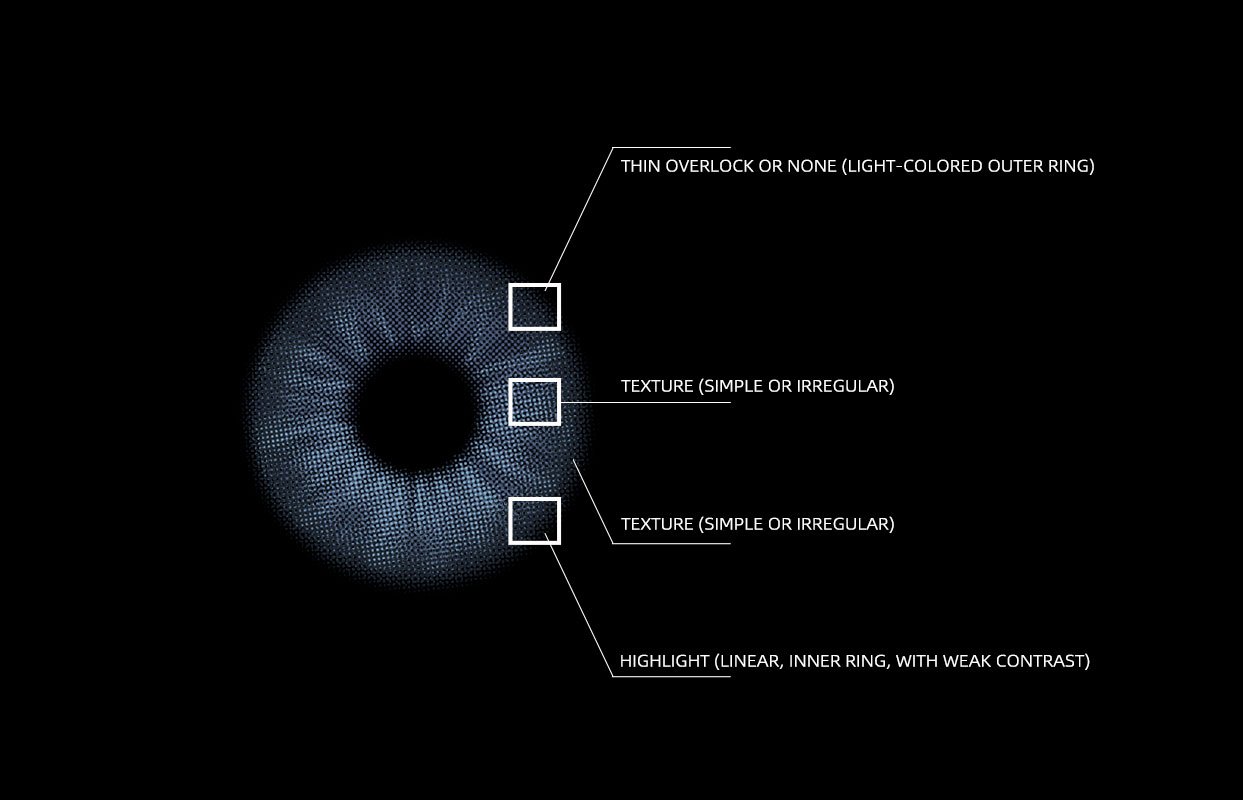
Type :Light Iris
Core Highlight Contact Lens Formula :No outer ring highlight + inner ring: dot-shaped low highlight (≤0.2 mm, fine sparkle/matte)
Summary
Combine the “warm/cool tone” of your natural iris (e.g., brown is warm, blue is cool) with the “dark/light” characteristics to accurately select colored contact lenses, achieving the effect of “enhancing advantages while minimizing mismatch.” Dark irises require “enhancement” (high color intensity, strong border), while light irises require “retention” (low color intensity, weak border). Highlight design should be chosen according to the iris characteristics, considering the appropriate position, size, and brightness.